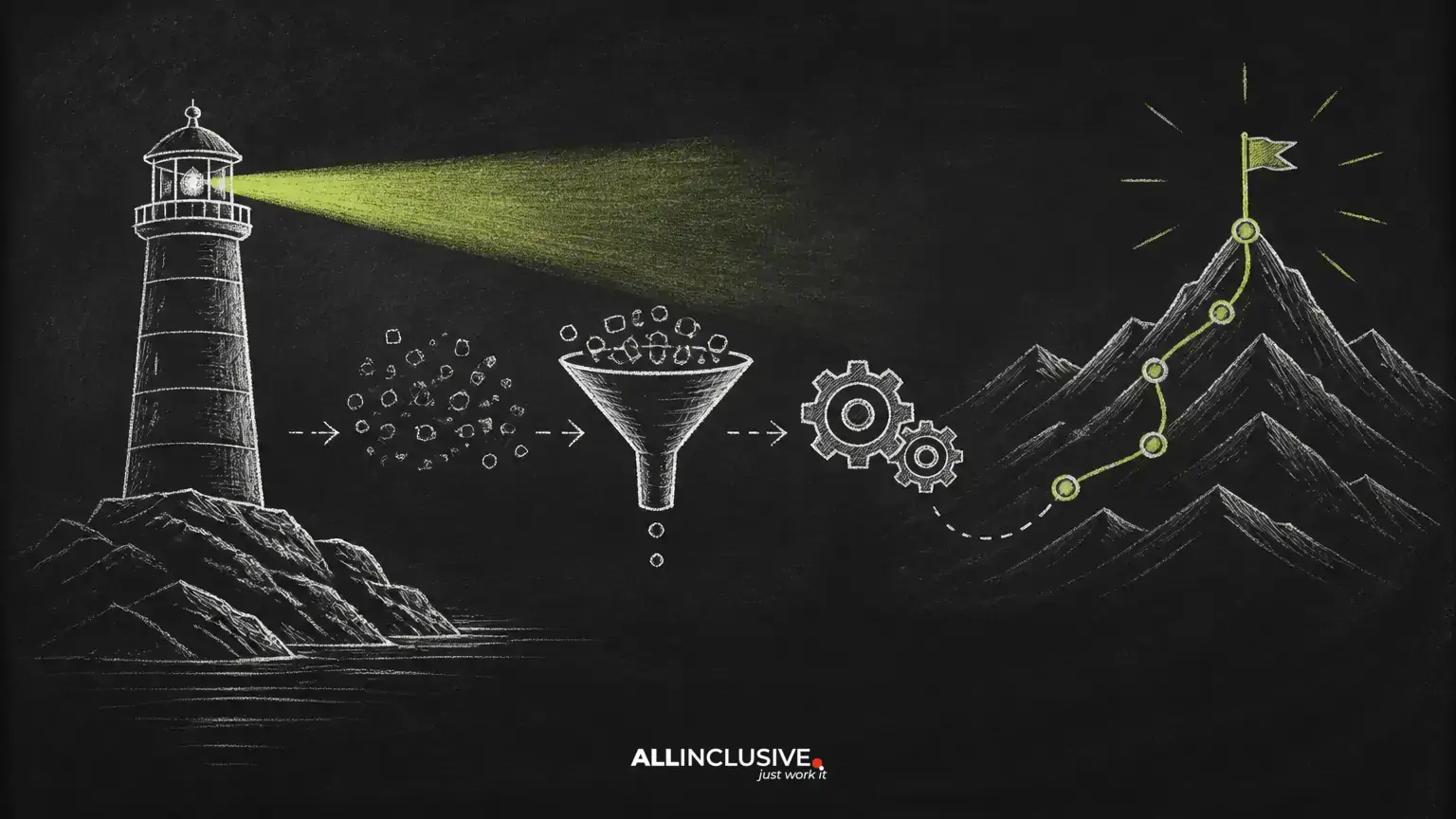
Advanced SEO is not a collection of secret shortcuts. It is the disciplined work of finding where a website loses relevance, visibility, crawlability, or user value—and improving those weaknesses in a controlled order.
For many sites, the best opportunities are not found by publishing more pages. They come from upgrading content that already attracts impressions, consolidating overlapping pages, building clear relationships between related resources, and resolving technical problems that prevent search engines or visitors from reaching the right information.
This guide presents a practical framework for advanced SEO work. Use it alongside your broader content marketing strategy, and review your priorities using first-party performance data whenever possible.
What makes an SEO tactic “advanced”?
An advanced tactic usually requires more than editing a title or adding a keyword. It involves analysis, prioritization, cross-page decisions, or coordination between content and technical teams.
Examples include:
- Improving an existing page based on the queries and intents it already attracts.
- Deciding whether similar pages should be differentiated, merged, redirected, or removed.
- Designing internal links that clarify topical relationships and guide users toward useful next steps.
- Investigating crawl behavior, server responses, templates, and large-scale technical patterns.
- Measuring changes against a defined baseline rather than assuming that every edit will produce a ranking gain.
These activities require judgment. A page that has few clicks may still support a valuable customer journey, while a page with traffic may attract the wrong audience. Treat performance data as evidence, not as an automatic instruction.
1. Upgrade existing content before expanding the library
New content can be valuable, but existing pages often provide a clearer starting point. A page may already have impressions, backlinks, internal links, or a history of satisfying a related need. Improving it can be more efficient than creating a competing URL.
How to identify upgrade candidates
- List important pages and record their organic clicks, impressions, click-through rate, and average position over a consistent period.
- Review the queries associated with each page, grouping them by search intent rather than treating every phrase as a separate target.
- Look for pages with meaningful impressions but weak clicks or rankings near the edge of prominent results.
- Compare the page with the actual questions a visitor must answer before taking the next step.
- Update facts, examples, screenshots, links, terminology, and recommendations only when you can verify that the revision is accurate.
Do not add paragraphs simply to make a page longer. Improve its usefulness by answering unresolved questions, clarifying definitions, showing a process, adding limitations, or making the next action obvious.
After publication, annotate the change in your reporting. Allow enough time for recrawling and measurement, and separate the effect of the edit from seasonality, demand changes, migrations, and other site changes.
2. Build topic clusters around real user needs
A topic cluster is a group of related pages organized around a central resource. The central page gives a broad overview, while supporting pages address narrower questions, use cases, comparisons, processes, or implementation details.
The model works best when it reflects genuine information architecture rather than a forced list of keywords. Begin with the audience’s decision journey:
- Understand: What does the reader need to learn first?
- Evaluate: What alternatives, risks, or criteria must they compare?
- Act: What service, product, template, or process helps them move forward?
- Validate: What evidence or practical detail would make the recommendation credible?
Use the pillar page to establish the subject and link to deeper resources where a reader would naturally need more detail. Supporting pages should link back when the broader context is useful. Avoid publishing several pages that answer essentially the same question; that creates maintenance costs and can make the preferred page unclear.
3. Audit content and choose between keep, improve, merge, or remove
A content audit should lead to decisions, not just a spreadsheet. Review each URL for purpose, audience, quality, accuracy, organic visibility, conversions, internal links, external references, and overlap with other pages.
A practical decision framework
- Keep: The page serves a distinct purpose and is accurate, useful, and appropriately connected to the site.
- Improve: The intent is worthwhile, but the page needs better coverage, clarity, evidence, formatting, or conversion support.
- Merge: Multiple pages serve substantially the same intent. Consolidate the strongest material into one destination and redirect retired URLs when appropriate.
- Remove: The page has no continuing purpose, cannot be made useful, and has no meaningful audience or link equity that requires preservation.
Do not remove pages solely because they have low traffic. Check whether they support email campaigns, sales conversations, navigation, returning users, or a specialized audience. Likewise, do not preserve every old URL indefinitely if it is inaccurate, duplicative, or confusing.
4. Diagnose intent conflicts instead of assuming keyword cannibalization
Two pages can mention the same phrase without competing directly. The real problem occurs when they satisfy the same intent and search engines repeatedly alternate between them—or select a page that is less useful for the query.
Possible signals include unstable ranking URLs, duplicated page purposes, overlapping titles and headings, diluted internal links, or two pages that provide nearly identical answers.
Resolve the issue based on the underlying intent:
- Differentiate the pages when their audiences, formats, stages, or use cases are genuinely different.
- Consolidate pages when one comprehensive resource would serve visitors better.
- Redirect a retired URL to the closest relevant destination, not merely to a generic page.
- Rework internal links so the preferred page receives clear, contextually relevant references.
- Use canonicalization only when pages are substantially duplicate and the canonical relationship is technically appropriate.
Record the chosen primary URL and the reason for the decision. This prevents future content work from recreating the same overlap.
5. Treat internal linking as information architecture
Internal links help people navigate and help search engines discover how pages relate. Their value comes from relevance and context, not from adding as many links as possible.
For each important page, ask:
- Which existing pages introduce the topic?
- Which pages explain a narrower concept?
- Where would a reader naturally need this resource?
- What descriptive anchor text accurately signals the destination?
- Does the destination offer a meaningful next step?
Link from relevant, established pages to priority resources, but also create reciprocal paths where they improve comprehension. Review navigation, breadcrumbs, related-resource modules, and body links together. A link buried in an unrelated block of recommendations is less useful than one placed beside a claim or decision that it helps explain.
Internal linking should support business priorities without becoming promotional clutter. A commercial page can be linked from educational content when the transition is natural and the destination matches the reader’s next need.
6. Make answers easy to extract without writing for algorithms alone
Clear structure improves usability and can make a page easier for search systems to interpret. Start sections with direct answers, then add explanation, examples, qualifications, and next steps.
Useful formats include:
- Short definitions followed by practical implications.
- Numbered procedures for tasks with a clear sequence.
- Comparison tables when readers must evaluate consistent criteria.
- Bulleted checklists for audits and implementation work.
- Question-and-answer sections that address genuine, relevant concerns.
Do not add structured data or question sections merely to pursue extra search-result features. Markup must accurately describe visible page content, and search appearance is never guaranteed. The priority should remain a complete, understandable answer.
7. Repair broken paths and outdated destinations
Broken internal links create friction and can interrupt discovery. Crawl the site periodically, review server responses, and inspect links in templates, navigation, content, images, downloads, and redirects.
When a destination has moved, redirect it to the closest equivalent. When no equivalent exists, update or remove the link rather than routing every error to the home page. Check redirect chains and loops, because a technically valid redirect can still create unnecessary latency or obscure the intended destination.
Backlinks pointing to retired URLs deserve a separate review. If the old page had a legitimate replacement, a well-configured redirect may preserve a useful path. If there is no relevant replacement, create one only when it serves a real audience need—not solely to capture a link.
8. Use log analysis when scale justifies it
Server logs can show which crawlers request which URLs, how often they return, and which response codes they receive. This is particularly useful for large sites, sites with faceted navigation, and environments where crawl behavior is difficult to infer from other reports.
Possible questions include:
- Are crawlers spending substantial activity on duplicate or low-value URL patterns?
- Are important pages receiving successful requests?
- Are redirects, errors, or slow responses concentrated in a template or directory?
- Do changes to internal links or XML sitemaps alter discovery patterns?
Log data is most useful when combined with a URL inventory and business priorities. It is not a substitute for making pages valuable, accessible, and technically sound. Protect sensitive data, establish an appropriate retention period, and involve the technical team before changing crawl-related controls.
9. Build an advanced SEO workflow
Advanced work becomes manageable when it follows a repeatable cycle:
- Diagnose: Gather performance, crawl, content, and conversion evidence.
- Prioritize: Rank opportunities by expected value, effort, risk, and confidence.
- Implement: Make one clearly documented change or a coordinated set of changes.
- Validate: Check rendering, links, redirects, indexing signals, and user experience.
- Measure: Compare the relevant page, query group, and business outcome against a baseline.
- Document: Record what changed, when it changed, and what should happen next.
A strong backlog distinguishes confirmed defects from hypotheses. It also assigns ownership, defines acceptance criteria, and avoids promising a specific ranking outcome.
Conclusion
The most durable advanced SEO gains usually come from better decisions: improve pages that already have potential, organize related information clearly, resolve competing intents, strengthen relevant internal paths, and investigate technical behavior at the appropriate scale.
Start with the highest-confidence opportunity that supports both user needs and business goals. Then measure carefully, retain what works, and let evidence—not the novelty of a tactic—determine the next investment.
For a broader view of how content and search strategy can work together, explore Allinclusive’s SEO services.