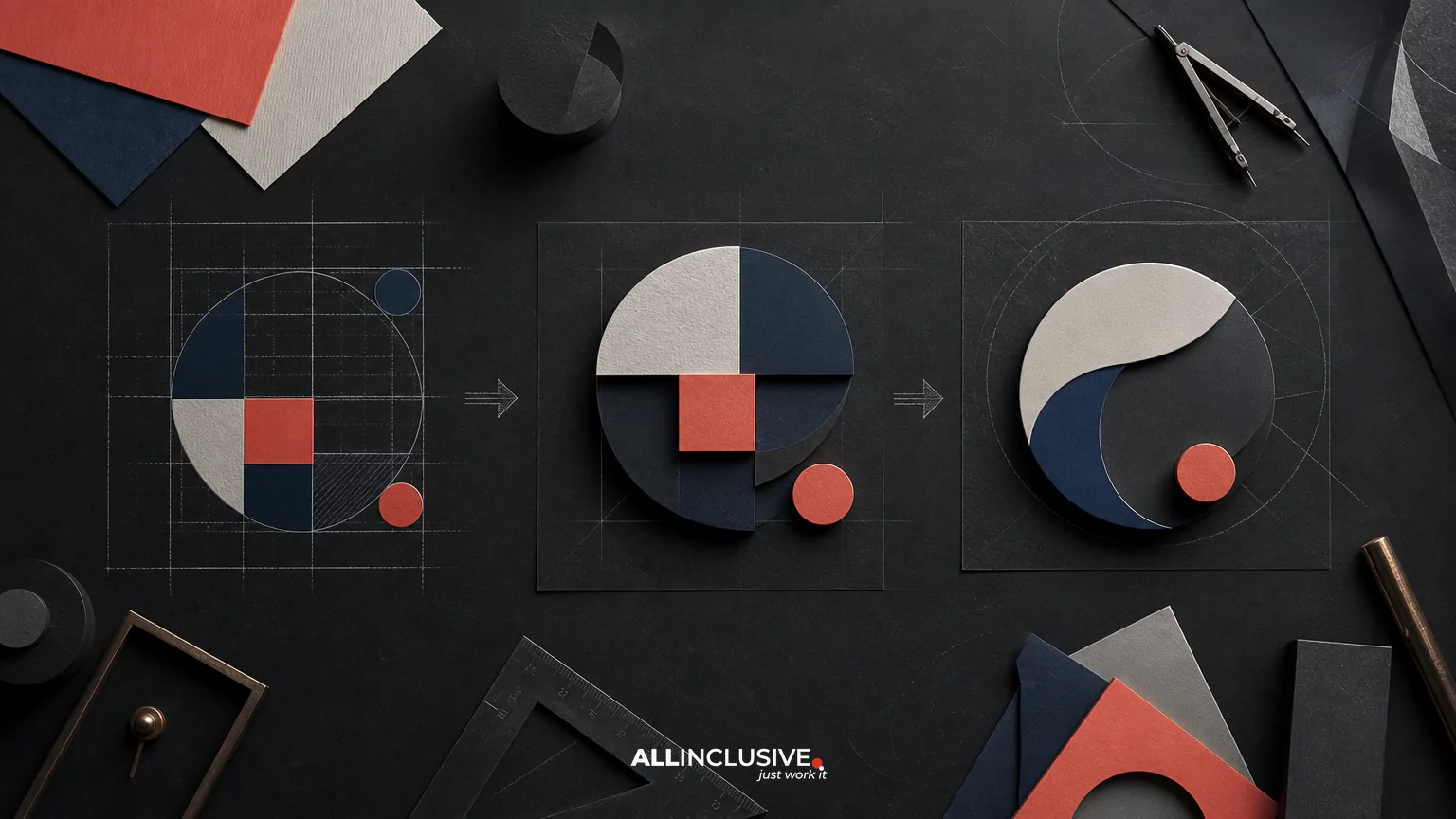
Rebranding brand equity is a balancing exercise: the business must become more relevant without making customers feel that the company they know has disappeared. The safest approach is not to preserve every existing design element. It is to identify which assets create recognition and trust, determine why change is necessary, and then change only what supports the business strategy.
A rebrand may involve a modest visual refresh, a redesigned logo, a revised positioning system, or a broader transformation of the brand identity. The right scope depends on the problem being solved—not on how dramatically the company wants to appear different.
What brand equity means during a rebrand
Brand equity is the accumulated value of what people recognize, remember, trust, and expect from a company. It can come from a name, logo, color system, packaging, distinctive language, customer experience, reputation, or repeated associations built over time.
Some elements are visible, while others are behavioral. A familiar symbol may help customers identify a product quickly. A consistent service experience may make the brand feel dependable. A particular tone of voice may signal expertise or approachability. Rebranding can affect all of these signals, even when the project is described as a visual update.
The key question is not “How much can we change?” It is “Which existing associations should remain valuable after the change?”
Start with the business reason for rebranding
Before reviewing logos, colors, or typography, document the business problem. A rebrand without a clear reason often becomes a subjective design exercise, with internal preferences standing in for strategy.
Common reasons include:
- The company has expanded into new markets or offerings.
- The current identity no longer reflects the quality or maturity of the business.
- Two companies or product lines need to operate under one coherent brand.
- The audience, competitive category, or buying process has changed.
- The existing identity is inconsistent across teams, channels, or locations.
- The brand is associated with an outdated position that the business needs to leave behind.
- The company name, visual system, or messaging creates legal, cultural, or operational problems.
Not every problem requires a full rebrand. If the strategy is sound and recognition is strong, the issue may be inconsistent implementation, weak brand guidelines, an outdated website, or an underdeveloped messaging system. In those cases, a focused design program may solve the problem with less disruption. The broader design process should begin with diagnosis rather than decoration.
Audit the equity you already have
Before deciding what to preserve, separate familiarity from genuine value. An element may be recognizable but no longer useful, or it may look ordinary internally while carrying strong meaning for customers.
Build an equity inventory across five areas:
- Recognition: What do customers identify quickly, even without the company name?
- Meaning: Which elements communicate a useful promise, category cue, or emotional association?
- Trust: Which signals reassure customers that the business is credible and consistent?
- Distinctiveness: Which assets help the brand stand apart from competitors?
- Operational value: Which components work well across digital products, signage, packaging, documents, and other touchpoints?
Review both quantitative and qualitative evidence where available. Look at customer feedback, sales conversations, search behavior, campaign performance, support questions, employee interviews, and channel audits. The goal is not to produce a perfect score for every asset. It is to reveal where recognition and meaning actually live.
Ask customers about associations, not just preferences
Questions such as “Which logo do you like better?” usually produce shallow feedback. More useful questions explore memory and expectations:
- How would you describe this company to someone who has not used it?
- What do you expect when you see this symbol or color combination?
- What feels most distinctive about the brand?
- What seems outdated, confusing, or inconsistent?
- Which competitors could be mistaken for this company?
Preference can inform design refinement, but recognition, relevance, and differentiation should carry more weight in the decision.
Choose a refresh, evolution, or full rebrand
Rebranding is not a binary choice between doing nothing and replacing everything. Most organizations can choose from a range of change.
| Scope | Best suited to | Primary trade-off |
|---|---|---|
| Brand cleanup | Inconsistent applications, files, templates, or usage | Low disruption, but limited strategic change |
| Visual refresh | A basically healthy brand that looks dated or uneven | Preserves recognition while improving relevance |
| Brand evolution | A business entering a new stage or audience | Requires careful transition between old and new signals |
| Full rebrand | A fundamental change in position, structure, name, or reputation | Creates the greatest opportunity and recognition risk |
A refresh may retain the core logo concept while improving proportion, typography, color, and application. An evolution may introduce a more flexible identity system and updated positioning while maintaining recognizable anchors. A full rebrand may replace the name, logo, messaging, and experience because the previous system no longer supports the business.
When the decision is uncertain, test the smallest change that can credibly solve the documented business problem. Larger scope should be justified by strategic need, not by a desire for visible novelty.
Preserve recognizable anchors
Customers rarely experience a brand as a single logo. Recognition often comes from a combination of repeated cues. Preserving two or three strong anchors can make a substantial change easier to understand.
Potential anchors include:
- A distinctive color or color relationship
- A recognizable symbol or visual motif
- A familiar name or descriptor
- A characteristic typographic treatment
- A signature illustration, pattern, shape, or image style
- A consistent verbal promise or phrase
- A dependable interaction or service behavior
Anchors should not be retained automatically. They need to remain appropriate, ownable, usable, and aligned with the future strategy. If an old element is generic, difficult to reproduce, or tied to a problem the rebrand must solve, preserving it may create more confusion than continuity.
Design the transition as a system
A new identity is not complete when the logo is approved. Brand equity is protected through coordinated application across the places where people encounter the business.
Create a transition map that identifies:
- Customer-facing digital properties
- Sales and marketing materials
- Product, packaging, or environmental applications
- Internal documents and employee tools
- Social profiles and advertising accounts
- Partner, reseller, and marketplace materials
- Legal, billing, and operational touchpoints
Prioritize high-frequency and high-consequence touchpoints first. A customer who sees the old identity on a website, the new identity in an email, and an unrelated version in a proposal may question whether the company is stable. A staged rollout can work, but the relationship between phases should be clear.
For visual system decisions, coordinate the logo with typography, color, layout, imagery, motion, and accessibility requirements. A logo redesign alone rarely fixes a fragmented brand experience. If the identity is changing alongside a digital property, a website redesign may need its own migration and content plan.
Use a controlled rollout plan
A controlled rollout reduces avoidable confusion and gives teams time to prepare. It should include ownership, dependencies, timing, and criteria for completion—not just a launch date.
- Align leadership: Confirm the reason for change, scope, decision rights, and success criteria.
- Prepare the system: Finalize identity components, templates, usage guidance, messaging, and production-ready files.
- Train internal teams: Explain what changed, what stayed, how to describe the change, and where to find approved assets.
- Sequence public touchpoints: Coordinate the website, communications, social channels, sales materials, signage, and partner updates.
- Use transition language: When appropriate, state that the company has a new look or identity while preserving continuity in the underlying business.
- Monitor questions: Track customer support issues, sales objections, employee confusion, and implementation errors.
- Retire old assets: Remove outdated files and access points so teams do not continue using conflicting materials.
For a deeper implementation framework, see the practical rebranding rollout plan. The rollout should also account for internal adoption; employees often become the first people customers ask when they notice a change.
Manage the logo transition carefully
Logo changes attract disproportionate attention, but they should be evaluated in context. A new mark can be strategically correct while still causing short-term recognition loss if introduced without supporting cues.
Consider a transition period when risk is high. Depending on the situation, the old and new marks may appear together in a limited, clearly explained format, or the updated mark may retain a recognizable shape, color, or name. Avoid maintaining two competing systems indefinitely. A transition should have a defined end state and clear rules for where each version appears.
Logo decisions should also account for small-size performance, one-color reproduction, contrast, responsive use, production constraints, and legal review. A mark that works in a presentation may fail on a mobile header, embroidered uniform, shipping label, or partner portal.
Build governance so equity does not erode again
Many rebrands lose value not because the strategy was wrong, but because the system is difficult to use. Teams need practical rules and accessible tools.
A useful governance setup includes:
- A concise brand guide for everyday decisions
- Detailed specifications for designers, developers, and production partners
- Approved templates for recurring communications
- A central asset library with clear file naming
- Named owners for brand questions and exceptions
- An intake or review process for major new applications
- Periodic audits across important customer touchpoints
Governance should enable consistent decisions rather than force every request through a slow approval chain. The more often employees need to improvise, the more likely the brand system is to fragment.
Measure whether the rebrand is working
Evaluation should include both business outcomes and brand signals. Do not rely only on launch attention or internal enthusiasm.
Depending on the objective, monitor:
- Unaided and aided recognition
- Correct understanding of the new positioning
- Brand search and direct traffic trends
- Qualified inquiries and conversion behavior
- Customer or prospect questions about the change
- Consistency across priority touchpoints
- Employee adoption and asset usage
- Accessibility, production, or implementation issues
Set a baseline before launch where possible and review results at practical intervals. The purpose is not to attribute every business movement to design. It is to identify whether the new system is being recognized, understood, used, and connected to the intended strategic shift.
Common mistakes that damage existing equity
- Changing before diagnosing: A visual problem may actually be a positioning, product, or experience problem.
- Confusing novelty with differentiation: A dramatic new look may still resemble category conventions.
- Discarding useful assets: Recognition-building elements may be removed simply because they feel familiar internally.
- Launching without operational readiness: Incomplete templates and inconsistent files create immediate fragmentation.
- Ignoring employees and partners: People outside the core marketing team often control important brand touchpoints.
- Measuring only aesthetics: Positive internal reactions do not prove improved recognition or relevance.
- Keeping old and new systems indefinitely: Extended ambiguity weakens confidence and increases production errors.
A practical decision checklist
Before approving the scope, ask:
- What specific business problem must the rebrand solve?
- Which existing associations are valuable and should remain?
- Which elements create confusion, weak differentiation, or outdated expectations?
- Would a refresh solve the problem, or is a deeper change necessary?
- What recognizable anchors can connect the old and new identities?
- Which touchpoints require a coordinated launch?
- Who owns implementation, training, governance, and measurement?
- How will the organization know whether recognition and understanding are improving?
If the answers are unclear, more discovery is needed before visual execution. For a broader comparison of continuity and recognition considerations, read rebranding without losing recognition. If the project requires a coordinated strategic and production process, the rebranding service overview can help frame the next step without replacing the diagnostic work above.
Protecting brand equity does not mean keeping the past untouched. It means carrying forward the associations that customers value while deliberately replacing the parts that limit the business. The strongest rebrands make that continuity visible, useful, and operationally consistent.