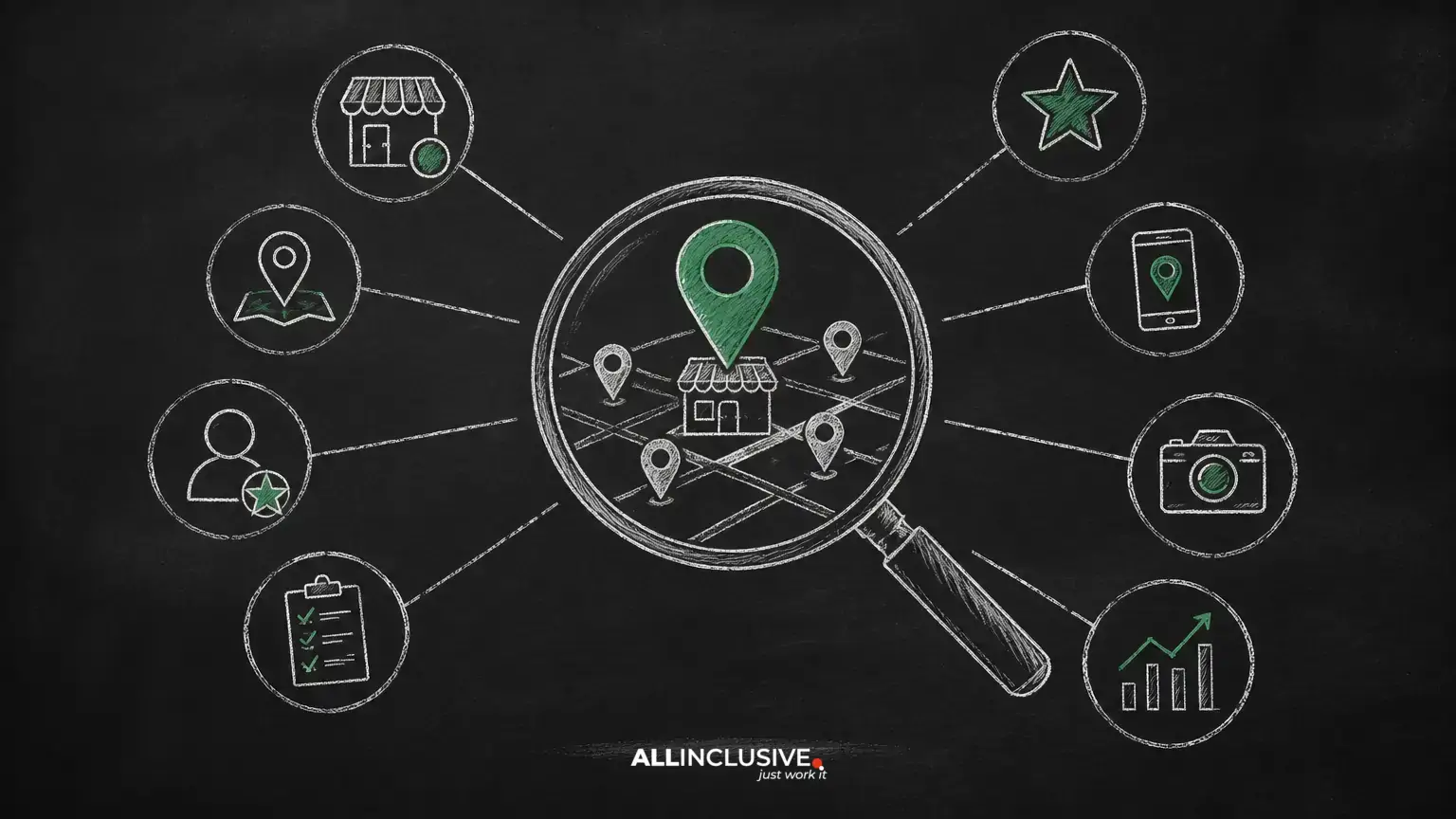
Local SEO is not a single setting you turn on. It is the combined result of a useful website, an accurate business profile, credible reputation signals, clear location information, and a customer experience that supports contact or purchase.
A local SEO audit helps you find the gaps between what your business offers, what searchers need, and what search engines can understand. The goal is not to add location words everywhere or chase rankings in isolation. The goal is to make your business easier to discover, evaluate, and contact when people are looking for a relevant local service.
Start with the customer and the service area
Before reviewing technical details, define the market you actually serve. List your core services, the locations you serve, the customers most likely to need each service, and the action you want them to take.
This prevents a common problem: creating broad pages for places or services that the business does not genuinely support. Local relevance should reflect real operations. If you serve customers at a physical location, explain how to find it. If you travel to customers, explain the service area and any practical limitations. If you serve a region remotely, make that clear rather than implying a local storefront.
Document the key business facts
- Official business name and preferred contact details.
- Physical address, if customers visit the location.
- Service areas and any location restrictions.
- Opening hours, holiday changes, and appointment requirements.
- Primary services and the problems each service solves.
- Preferred contact, booking, quote, or purchase method.
These facts become the reference point for the rest of the audit.
Audit the website’s local foundations
A local website should make three things obvious: what the business does, where it operates, and how a visitor can take the next step. Review the homepage, service pages, contact page, navigation, footer, and mobile layout with those questions in mind.
Use a clear title and heading structure that describes the page accurately. A page about a specific service should explain that service rather than relying on a generic phrase such as “Welcome” or “Our solutions.” Location references should be natural and supported by useful information, not repeated mechanically.
Check the contact and location experience
- Make the phone number easy to find and usable on mobile devices.
- Show a complete address when customers can visit a physical location.
- Provide directions, parking details, access information, or appointment instructions when relevant.
- Explain service areas without listing locations that are not genuinely served.
- Use one consistent version of the business details across important pages.
- Give visitors a clear next step, such as calling, booking, requesting a quote, or visiting.
An embedded map can be helpful for a customer-facing location, but it is not a substitute for written directions or accurate contact information.
Improve service and location page usefulness
Many local businesses have only a homepage and a short contact page. That structure may not answer the questions people ask before choosing a provider. Build pages around real customer intent instead of producing thin pages for every nearby town.
A strong service page can cover the problem addressed, who the service is for, what the process involves, likely preparation requirements, limitations, pricing factors, and how to get help. Add location context when it changes the customer experience, such as travel boundaries, local regulations, delivery zones, or in-person availability.
Create a separate location page only when there is enough genuine information to make it useful. Each page should have a distinct purpose and should not simply swap one place name for another.
Review your business profile
Your business profile is often a customer’s first interaction with the company. Audit the listing for accuracy, completeness, and alignment with the website. The available fields and features can change, so verify current platform guidance before making operational decisions.
- Confirm the official name, address, phone number, hours, category, and website link.
- Choose categories that accurately describe the primary business and relevant offerings.
- Describe services in plain language that matches the real customer experience.
- Add current, representative photos of the premises, team, products, or completed work where appropriate.
- Review the listing regularly for suggested edits or outdated information.
- Check that booking, messaging, or appointment links lead to a working destination.
Do not treat every profile field as an opportunity to insert keywords. Accuracy and usefulness protect trust better than exaggerated descriptions.
Build a responsible review process
Reviews influence how prospective customers evaluate a business. They also reveal recurring questions, service strengths, and operational problems that your website may not address.
Ask for honest feedback from customers after a legitimate interaction, using a process that follows the relevant platform’s rules. Do not offer rewards for positive reviews, pressure customers to change their feedback, or publish reviews that were not written by real customers.
Respond with care
Responses should be timely, calm, and specific without exposing private customer information. Thank customers for useful feedback. When a review raises a concern, acknowledge the issue and offer an appropriate offline route for resolution. A defensive or copied response can create more distrust than no response at all.
Look for patterns rather than obsessing over an average score. If customers repeatedly mention unclear scheduling, difficult access, or confusing pricing, improve the underlying experience and then update the relevant page.
Strengthen local trust beyond your own website
Local visibility is supported by consistent references across relevant third-party sources. Review business directories, professional associations, chambers of commerce, supplier pages, local publications, and other sources that genuinely relate to the business.
Prioritize quality and accuracy. Remove or correct outdated details where possible, and avoid mass submissions to low-quality directories. A smaller set of trustworthy references is more useful to customers than a large collection of irrelevant listings.
Also consider partnerships and community activity that naturally earn attention, such as educational resources, local events, professional contributions, or useful collaborations. These should be pursued for their real value, not manufactured solely to obtain links.
Use competitor research to find customer questions
Competitor research is most useful when it reveals unmet needs, not when it encourages imitation. Compare businesses that compete for the same service and customer, separating traditional organic results from map or local results.
Review the questions their pages answer, the services they explain clearly, the information customers praise or criticize, and the steps required to contact them. Then create a better resource based on your own expertise and operations. Do not copy claims, wording, images, or reviews.
Search suggestions and related questions can provide topic ideas, but validate them against actual customer conversations, sales questions, support requests, and the services you can deliver.
Check technical accessibility and measurement
Technical SEO should support discovery and usability. Confirm that important pages can be crawled, load reliably, work on mobile devices, and use descriptive titles and links. Resolve broken navigation, accidental noindex instructions, duplicate page versions, and forms that fail on common devices.
Structured data can help describe eligible business information when it accurately matches the visible page. It does not guarantee enhanced search results, so treat it as supporting markup rather than a ranking shortcut.
Measure actions that matter to the business. Depending on the model, this may include calls, completed forms, bookings, direction requests, store visits, qualified inquiries, or sales. Use analytics and call or booking systems carefully, with attention to privacy and attribution limits.
A simple local SEO audit workflow
- Inventory: record services, locations, customer types, business facts, and conversion actions.
- Verify: check the website, business profile, directories, and major customer-facing references.
- Prioritize: fix inaccurate contact details, broken conversion paths, missing core service information, and serious accessibility problems first.
- Improve: expand useful service content, clarify location information, strengthen review processes, and add helpful media.
- Measure: establish a baseline for visibility and qualified actions, then annotate significant changes.
- Revisit: review information after changes to hours, services, locations, ownership, or customer experience.
Common local SEO mistakes to avoid
- Creating near-identical pages for every city without unique value.
- Using a virtual or inaccurate address to appear closer to searchers.
- Changing the business name to include promotional keywords.
- Buying reviews or asking only satisfied customers to review.
- Publishing generic articles unrelated to the actual service.
- Measuring impressions or rankings without checking qualified leads and customer actions.
- Assuming a technical audit score represents complete local search health.
Conclusion
Effective local SEO begins with operational truth: accurate business information, clear services, useful location context, credible reputation signals, and a straightforward customer journey. Audit those foundations before investing in volume tactics. Then improve the pages and processes that help real customers decide whether to contact you.
For a broader view of how local work fits into an overall search strategy, explore Allinclusive SEO services. You can also review the local SEO resource for related guidance.