Logo redesign cost depends on what the business is actually changing. A light refresh may involve refining typography, spacing, color, or digital legibility. A more substantial evolution may require a new symbol, responsive logo system, and updated applications. A full replacement can extend into brand strategy, identity architecture, naming considerations, guidelines, and a coordinated rollout.
For most organizations, the right question is not “What does a new logo cost?” but “How much change is necessary to solve the business problem without destroying useful recognition?” This guide explains the main cost drivers and helps you choose between a refresh, an evolution, and a full replacement. For broader commercial planning, see the rebranding services overview.
What determines logo redesign cost?
A logo is rarely delivered as a single isolated file. A professional redesign may include discovery, competitive review, concept development, typography or symbol work, testing, production files, guidelines, and support for applying the identity across real touchpoints.
The following factors usually have the greatest effect on scope:
- Strategic complexity: A company entering new markets or managing multiple sub-brands needs more decisions than a local business correcting an outdated mark.
- Degree of change: Refining an existing logo generally requires less exploration than developing a new identity system from the ground up.
- Number of stakeholders: Executive teams, boards, franchisees, investors, and regional operators can add review rounds and alignment work.
- Required applications: A mark used only on a website has fewer production demands than one used on packaging, signage, vehicles, uniforms, software, and documents.
- Digital requirements: Responsive versions, app icons, social avatars, animation, accessibility considerations, and small-size performance can expand the deliverables.
- Rollout responsibility: Updating templates, physical environments, product labels, and communications is separate from drawing the logo but often part of the real project cost.
Requesting a price before defining these variables can produce a misleading comparison. Two proposals may show different numbers because one covers only the core artwork while another includes research, a complete asset library, and implementation guidance.
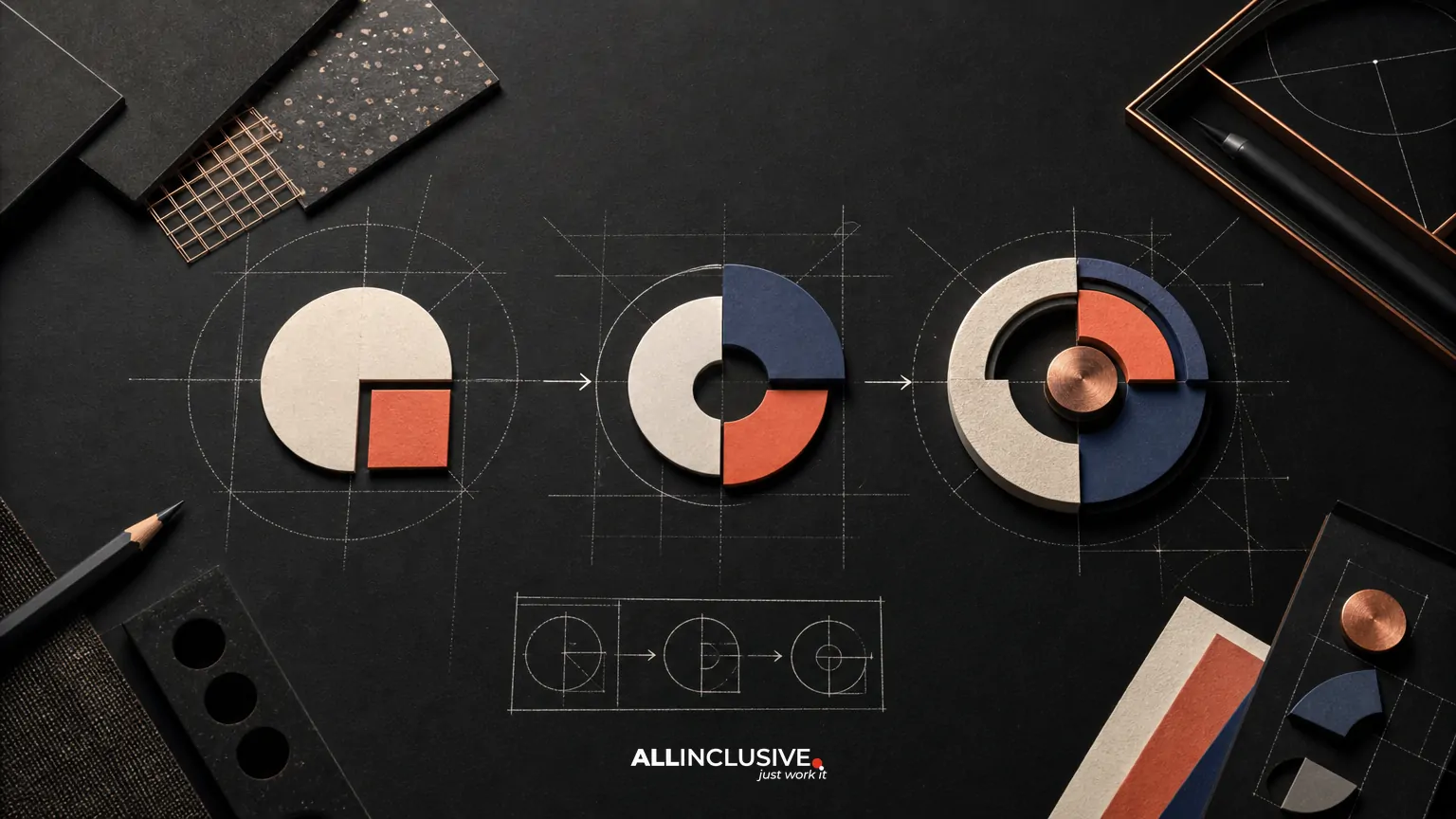
Three common levels of logo change
1. Logo refresh
A refresh preserves the recognizable core of the existing logo while improving its execution. Typical work includes adjusting proportions, simplifying details, modernizing typography, correcting color relationships, or creating cleaner digital versions.
A refresh is often appropriate when:
- Customers recognize and trust the current mark.
- The business has not fundamentally changed its position or audience.
- The logo looks dated mainly because of execution rather than strategy.
- The current artwork is difficult to reproduce, scale, or use consistently.
The main advantage is continuity. The main risk is under-solving the problem. If the brand’s positioning, audience, or portfolio has changed, cosmetic improvements may leave the business with a polished version of an outdated idea.
2. Logo evolution
An evolution keeps some equity while making a noticeable strategic and visual shift. The symbol may be redrawn, the wordmark replaced, the color system expanded, or the relationship between the elements redesigned. An evolution commonly includes a broader identity system rather than a single final logo.
This route can work when the organization wants to appear more relevant or differentiated but does not want to abandon every existing recognition cue. It requires careful judgment about which elements are genuinely valuable and which are merely familiar to internal stakeholders.
3. Full logo replacement
A full replacement creates a new mark because the current one no longer supports the organization’s direction. This may be necessary after a merger, major repositioning, category change, reputational problem, international expansion, or a shift from a founder-led business to a more scalable brand.
Replacement usually carries the greatest strategic and implementation burden. It may require a new visual identity, brand architecture decisions, messaging alignment, updated templates, legal review, and a phased transition plan. The cost is not justified simply because a leadership team is tired of the current logo; the business case should be clear.
What is typically included in a logo redesign project?
Before comparing estimates, separate the work into phases. A well-defined scope may include:
- Discovery and diagnosis: Interviews, stakeholder input, audience considerations, business goals, and an audit of current logo use.
- Competitive and category review: Examination of visual conventions and opportunities for distinction. This is not the same as copying competitors; it is a way to understand the design environment.
- Concept development: Strategic directions and initial visual routes that test different solutions to the identified problem.
- Design refinement: Development of the selected direction, including typography, symbol construction, color, spacing, and responsive behavior.
- Testing and review: Evaluation at practical sizes and across key applications, with a controlled process for stakeholder feedback.
- Production: Vector artwork, color variations, monochrome versions, file formats, and lockups for relevant channels.
- Guidance: Rules for clear space, minimum size, color use, backgrounds, placement, and common misuse.
- Rollout support: A prioritized inventory of assets, replacement timing, templates, and responsibilities for internal teams and vendors.
Not every project needs every item. The important point is to define what the organization must be able to use after approval, not just what should be shown in a presentation.
How to choose between a refresh, evolution, and replacement
Use the following questions to diagnose the appropriate level of change:
| Question | If the answer is yes | Likely direction |
|---|---|---|
| Do customers recognize the current logo positively? | Existing equity may be worth preserving. | Refresh or evolution |
| Has the business strategy or audience changed materially? | The identity may no longer express the organization’s role. | Evolution or replacement |
| Is the primary problem poor execution across digital and physical uses? | The concept may work, but the system does not. | Refresh |
| Does the current mark create confusion, legal concern, or category misalignment? | Preserving it may carry greater risk than changing it. | Evolution or replacement |
| Are multiple brands, regions, or offerings difficult to organize? | The issue may extend beyond the logo itself. | Identity or architecture work |
A useful decision test is to describe the business problem without mentioning design preferences. “The logo feels old” is subjective. “The mark is unreadable at mobile sizes, conflicts with our premium positioning, and cannot organize our new product portfolio” provides a much stronger basis for scope.
Hidden costs to include in the budget
The approved design fee is only one part of the financial picture. Plan for the operational work that follows approval:
- Asset inventory: Websites, sales materials, presentations, packaging, signage, uniforms, vehicles, invoices, software interfaces, social profiles, and partner materials.
- Production and replacement: Printing, fabrication, packaging changes, environmental graphics, photography updates, and vendor setup.
- Internal time: Leadership reviews, legal coordination, procurement, communications, and training.
- Technology updates: Website components, email signatures, app stores, digital products, and account profiles.
- Transition management: Decisions about whether to change everything at once, use a dual-mark period, or prioritize high-visibility locations and channels.
- Governance: A person or team responsible for approving future uses and maintaining the system.
A controlled rollout can reduce waste. Begin with high-impact and high-risk applications, document dependencies, and replace assets according to natural production cycles where appropriate. A cheap redesign can become expensive if no one plans how it will be adopted.
How to compare logo redesign proposals
Price alone is a weak evaluation method. Ask each provider to clarify:
- What business questions will the project answer?
- How many strategic and visual directions are included?
- How are decisions and feedback managed?
- What counts as a revision round?
- Which file formats, variations, and applications are included?
- Are guidelines included, and how detailed are they?
- Does the scope cover responsive or digital-first use?
- Who owns the final files and how will they be delivered?
- What rollout or implementation support is available?
- Which items are explicitly excluded?
Be cautious with proposals that promise unlimited revisions without a decision process. Unlimited options can increase internal disagreement rather than improve the result. A defined approval structure is usually more valuable than an undefined promise of additional work.
Common mistakes that increase cost without improving the outcome
Starting with visual preferences
Beginning with “make it modern” or “try a different color” can lead to disconnected concepts. Establish the business problem and success criteria first.
Underestimating stakeholder alignment
When decision rights are unclear, every reviewer can become a creative director. Assign one accountable decision-maker and collect feedback against agreed criteria.
Ignoring existing equity
A familiar shape, color, or wordmark may carry recognition that is not obvious from internal discussions. Test what should be retained before discarding it.
Designing only for the presentation
A logo that looks impressive on a large slide may fail on a favicon, product label, embroidered garment, or low-contrast background. Evaluate real use cases early.
Approving the mark without a rollout plan
Approval is not implementation. Create an inventory, sequence changes, and define how employees, vendors, and partners will receive the new assets.
A practical logo redesign budget checklist
Before requesting or approving a proposal, document:
- The business reason for changing the logo.
- The audiences and markets affected.
- What recognition or equity must be preserved.
- The required level of change: refresh, evolution, or replacement.
- Priority applications and technical requirements.
- Decision-makers, reviewers, and approval milestones.
- Required deliverables and file formats.
- Guidelines and governance needs.
- Rollout timing, dependencies, and internal owners.
- Budget assumptions and items that may be handled separately.
For context on how logo work fits into a larger identity system, compare the related discussion of rebrand versus brand refresh. If the project is part of a broader change, the guide to rebranding cost can help you separate identity decisions from implementation and organizational work.
Final takeaway
Logo redesign cost should reflect the problem being solved, the amount of equity at stake, and the work required to make the new system usable. A refresh is often the right choice when recognition is strong and execution is the issue. An evolution fits organizations that need meaningful change while preserving selected cues. A full replacement is appropriate when the current mark fundamentally conflicts with the business direction.
Once the scope is clear, the next step is to align strategy, identity work, and rollout planning rather than treating the logo as an isolated graphic. Explore the broader brand identity design context and the assigned rebranding resource when you are ready to evaluate the project commercially. For additional design planning guidance, visit design resources.