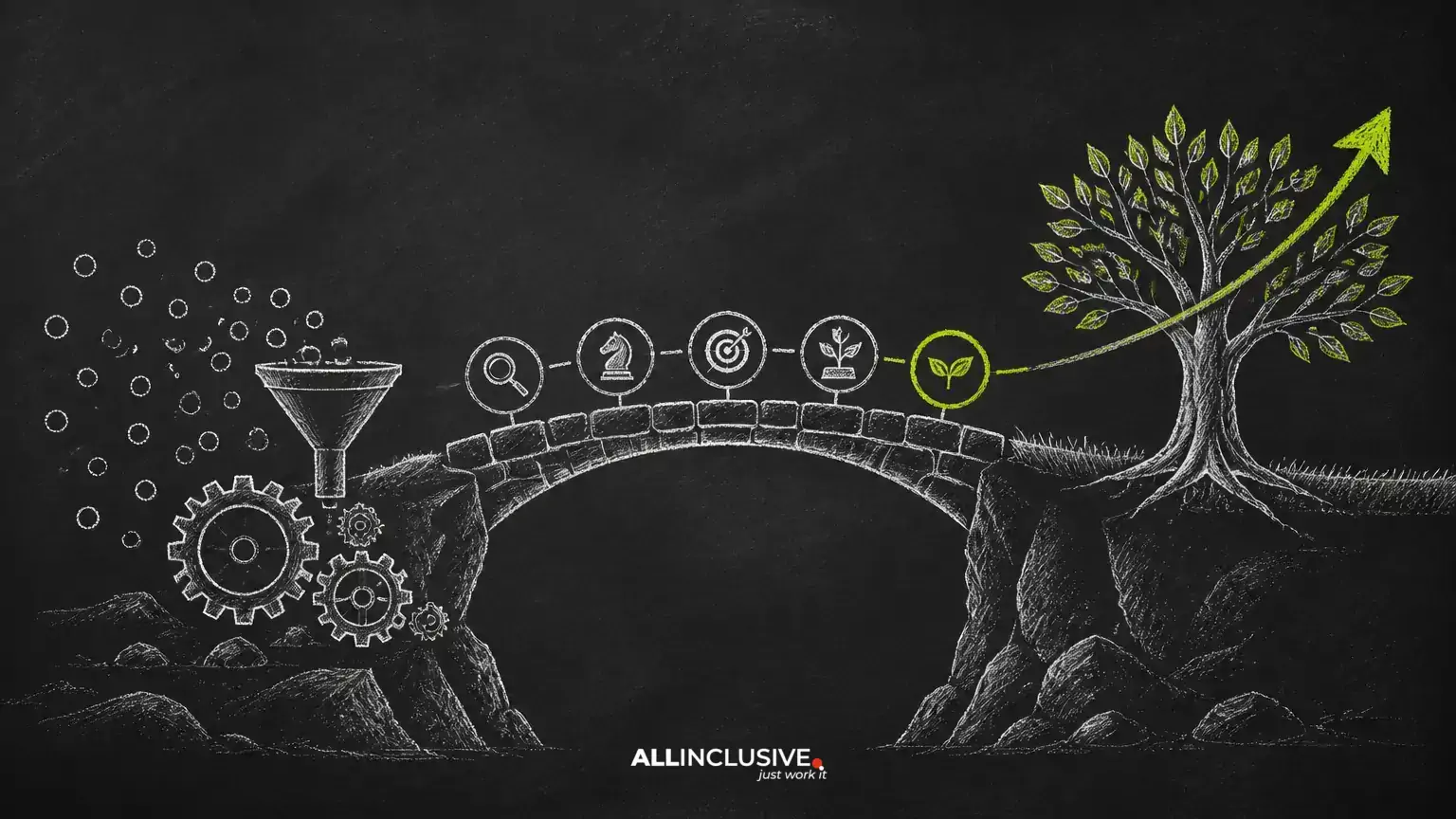
B2B SEO is not simply a matter of adding keywords to a website. It is a process for making your expertise discoverable when potential customers are defining a problem, comparing approaches, evaluating suppliers, or preparing to buy.
The strongest strategy reflects how B2B purchasing actually happens: multiple stakeholders, longer evaluation periods, specialized language, and a meaningful gap between an initial visit and a signed agreement. That means success should be judged by the quality of visibility and the business conversations it creates, not by rankings alone.
This guide presents a practical framework for building a B2B SEO program that connects audience research, technical foundations, content, commercial pages, authority, and measurement.
What makes B2B SEO different?
The fundamentals of SEO apply across industries, but B2B search behavior creates several strategic differences.
- Several people may influence one purchase. A user, technical evaluator, executive sponsor, procurement team, and finance stakeholder may all have different questions.
- The buying cycle is often extended. A visitor may return repeatedly, share resources internally, and compare options before contacting a provider.
- Search demand can be specialized. Valuable queries may have modest visible volume because they use technical, operational, or industry-specific language.
- Conversion is rarely immediate. A useful download, consultation request, product demonstration, or return visit may be an important step before revenue is recorded.
- Trust carries substantial weight. Buyers need evidence that a provider understands their environment and can address practical risks.
These conditions favor depth, clarity, and alignment over a broad publishing schedule built around disconnected keywords.
Start with the buying process, not a keyword list
Before researching queries, document how customers recognize a need and decide whether to act. Speak with sales, customer success, subject-matter experts, and—where appropriate—existing customers. Review recurring questions, objections, implementation concerns, and reasons opportunities are won or lost.
Then describe the people involved in the decision. A useful B2B audience profile should include:
- Role and level of responsibility
- Business problems and desired outcomes
- Technical knowledge and preferred terminology
- Common triggers that create urgency
- Questions asked during evaluation
- Risks or objections that delay a decision
- Evidence required to approve a purchase
Do not treat personas as fictional biographies. Use them as working models based on customer and sales evidence. If different audiences search for different solutions, their needs should influence the information architecture and content plan.
Map search intent to the B2B journey
Search intent is more useful than keyword volume alone. Group opportunities by the decision a searcher is trying to make.
Problem and education queries
These searches occur when a prospect is trying to understand an issue, define terminology, or identify possible approaches. Content should explain the problem accurately, distinguish related concepts, and help readers decide what to investigate next.
Solution and comparison queries
At this stage, the audience is assessing methods, categories, vendors, or implementation options. Useful pages should explain trade-offs, selection criteria, limitations, and the conditions under which an approach may or may not fit.
Commercial and evaluation queries
These searches indicate stronger interest in a product, service, provider, or engagement. The page should make the offer understandable and provide evidence, process detail, scope information, and a clear next step without overstating outcomes.
Existing-customer queries
Support and implementation content can reduce friction after purchase and demonstrate operational expertise. These pages may also answer questions prospective customers have about onboarding, governance, integration, or ongoing use.
Assign each important topic a primary intent and a logical destination. This helps prevent a general blog post from competing with a service page for the same need.
Build a topic and page architecture
A B2B website usually needs more than a blog. Its structure should help users and search engines understand the relationship between the company’s offerings, industries, use cases, and educational resources.
A practical architecture may include:
- Core service or product pages: Explain what the business provides, who it serves, the problem addressed, and how engagement works.
- Industry or audience pages: Address legitimate differences in regulation, workflow, terminology, or operational context.
- Use-case pages: Show how a solution applies to a specific business problem or outcome.
- Educational guides: Answer broader questions and establish context before a buyer is ready to evaluate suppliers.
- Proof and decision-support pages: Include relevant case studies, process explanations, FAQs, comparisons, or implementation guidance.
Connect related pages with descriptive internal links. A guide about a business problem can link to a relevant solution page; a solution page can link to supporting explanations and proof. Linking should help the reader take the next logical step, rather than merely increasing the number of links.
For broader guidance on organizing an organic search program, see Allinclusive SEO services.
Create content that advances a decision
Every B2B page should have a defined job. Before publishing, state the audience, intent, business question, desired next step, and evidence needed to make the page credible.
Useful content often includes:
- A direct answer near the beginning
- Definitions that remove ambiguity
- Examples grounded in realistic business situations
- Trade-offs and limitations, not just benefits
- Practical steps, checklists, or evaluation criteria
- Clear distinctions between related solutions
- Links to deeper resources and relevant commercial pages
Subject-matter expertise is particularly important in specialized markets. Editors should work with knowledgeable practitioners to check terminology, assumptions, examples, and claims. The goal is not to make every page sound academic; it is to make the advice accurate, specific, and usable.
Optimize commercial pages for clarity and trust
Service and product pages are often the most important pages in a B2B SEO program, yet they are frequently too vague. A strong commercial page should answer the questions a qualified buyer needs resolved before starting a conversation:
- What is being offered?
- Who is it designed for?
- Which problems or outcomes does it address?
- What is included and what is outside scope?
- What does the process look like?
- What information is needed to begin?
- What risks, constraints, or dependencies should a buyer understand?
- What is the appropriate next step?
Use language your audience understands, but include important technical detail where it affects evaluation. Avoid unsupported guarantees, inflated superlatives, and generic claims that could describe any competitor.
Protect the technical foundation
Technical SEO does not replace useful content, but technical problems can prevent good content from being discovered, understood, or used.
Review the fundamentals:
- Important pages are crawlable and indexable.
- Canonical signals are consistent and intentional.
- Page titles and descriptions accurately reflect the content.
- Headings create a logical hierarchy.
- Internal links expose important pages without relying on accidental navigation paths.
- Templates work well on mobile devices and support accessible reading.
- Images have meaningful alternative text where appropriate.
- Redirects, broken links, duplicate pages, and thin variations are controlled.
- Performance issues are investigated and prioritized according to user impact.
Technical reviews should end in an ordered action list. Fix issues that block access, create confusion, or affect important commercial journeys before spending time on low-impact refinements.
Earn authority through useful distribution
Publishing is only one part of a content program. Strong resources can earn attention when they contain original expertise, clear examples, useful data that can be verified, or a genuinely helpful tool or framework.
Distribution may include subject-matter experts sharing resources with relevant professional communities, partnerships, newsletters, events, public relations, and direct outreach to publishers who would reasonably benefit from the material. Outreach should be selective and relevant. Buying links, pursuing unrelated placements, or using repetitive promotional messages can damage trust and create quality risks.
Internal authority matters too. Link from established pages to new strategic resources, keep important content maintained, and make authorship and review processes clear where expertise is material to the topic.
Measure business progress, not just traffic
B2B SEO measurement should connect search visibility to meaningful user actions and pipeline quality. A useful reporting framework may include:
- Visibility for priority topics and pages
- Organic visits to commercial and educational content
- Engagement with key calls to action
- Qualified inquiries, demo requests, or consultation starts
- Downloads or other assisted-conversion actions
- Lead quality and progression, where reliable CRM data is available
- Conversions by audience, topic, landing page, and journey stage
Do not assume every organic visit should convert immediately. Educational content can introduce a prospect, support later evaluation, or assist a sale without being the final touchpoint. Compare performance over a suitable period, annotate major changes, and use page-level evidence before changing direction.
A practical 90-day starting plan
- Weeks 1–2: Interview internal teams, define priority audiences, document the buying process, and audit important pages.
- Weeks 3–4: Research topics by intent, identify content gaps, group related pages, and select commercial priorities.
- Weeks 5–8: Improve priority service pages, resolve critical technical issues, and publish a small set of high-value resources.
- Weeks 9–12: Strengthen internal links, distribute the best resources, review early engagement signals, and refine the next content queue.
This sequence is deliberately focused. A smaller number of well-researched pages is usually easier to maintain, connect, and evaluate than a large volume of generic articles.
Conclusion
Effective B2B SEO aligns what people search for with the questions they must answer before making a business decision. Begin with customer understanding, organize topics around intent, improve commercial pages, maintain a sound technical foundation, demonstrate expertise, and measure outcomes across the longer buying journey. The result is a search program built to be useful—not merely visible.
For related guidance, see Contact.