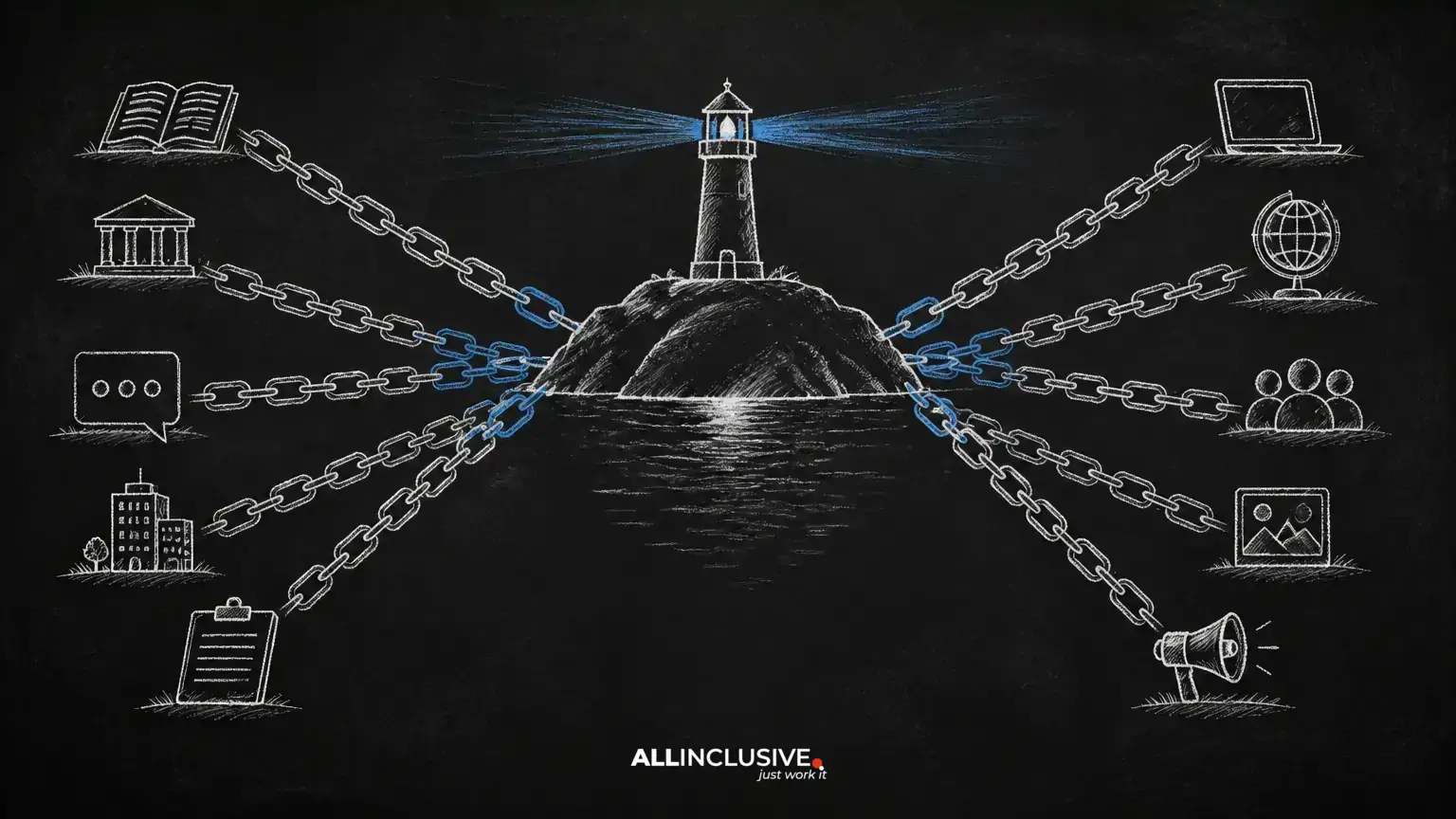
Off-page SEO is the practice of improving how your website is understood and discovered through activity beyond your own website. It includes earning relevant links, building brand recognition, developing relationships with trusted publishers, managing local listings, and creating experiences that people are willing to mention or recommend.
It is broader than link building, although links remain an important part of many off-page strategies. The most durable approach is not to manufacture signals. It is to create something useful, make it visible to the right people, and earn attention that reflects genuine value.
What does off-page SEO include?
Off-page SEO covers external signals and marketing activities that can influence your visibility, reputation, referral traffic, and perceived relevance. Common examples include:
- Link earning: gaining editorial links from relevant websites because your content or organization is useful to their audience.
- Digital PR: presenting original expertise, research, commentary, or resources to journalists and publishers.
- Brand building: increasing awareness so people search for, discuss, and return to your brand.
- Local visibility: maintaining accurate business profiles, citations, and review processes where local discovery matters.
- Community participation: answering questions and contributing expertise in appropriate industry communities without promotional spam.
- Partnerships and events: collaborating with organizations, associations, podcasts, or events that reach a relevant audience.
- Reputation management: monitoring public feedback and responding constructively to reviews and mentions.
Not every external activity creates a direct ranking effect. Some activities primarily generate referral visits, awareness, trust, or future demand. Those outcomes still matter because SEO works as part of a broader acquisition system.
Off-page SEO vs. on-page and technical SEO
SEO is easier to plan when its major workstreams are separated, even though they support one another.
| SEO area | Primary focus | Examples |
|---|---|---|
| On-page SEO | Helping users and search engines understand a page | Page topics, headings, internal links, titles, useful copy, and media |
| Technical SEO | Making a site accessible, crawlable, indexable, and usable | Site architecture, redirects, performance, canonicalization, and structured data |
| Off-page SEO | Building external recognition, relevance, and trust | Editorial links, digital PR, reviews, partnerships, and brand mentions |
A strong external campaign cannot compensate for a confusing website, thin content, or serious technical problems. Before investing heavily in outreach, make sure the destination pages clearly satisfy the user’s need and that search engines can access them.
Why off-page SEO matters
Search engines need to evaluate more than what a website says about itself. Independent references can provide context about a company, author, resource, or location. A relevant editorial link may help people discover a page and may also contribute to how the page is evaluated. Mentions without links can still expose a brand to new audiences and create opportunities for future engagement.
Off-page work also has benefits that do not depend on rankings. A well-placed mention can generate qualified referral traffic, strengthen credibility during the buying process, support recruitment, and create relationships with publishers or organizations in the same field.
However, external signals are not a substitute for usefulness. A large number of unrelated, low-quality, or manipulated links is not a sound strategy. Prioritize relevance, editorial judgment, audience value, and long-term reputation.
How to build an effective off-page SEO strategy
1. Start with a page and audience objective
Do not begin with a list of websites or a target number of backlinks. Begin with a business and audience question. Are you trying to make a service page more discoverable, help a research report reach professionals, increase local inquiries, or establish an expert as a credible source?
Choose a destination that genuinely deserves attention. It might be an original guide, a useful tool, a well-supported study, a local resource, or a service page that clearly explains a real solution. Define the intended audience and the action you want visitors to take after arriving.
2. Audit your existing reputation and links
Review the websites that already mention or link to your organization. Look for patterns:
- Which pages attract the most external attention?
- Which referring websites are genuinely relevant to your audience?
- Are important brand mentions missing a useful link?
- Do links point to outdated, redirected, or weak pages?
- Are there suspicious patterns that require investigation?
Use reliable analytics and backlink tools as directional evidence, not as a single definition of quality. Third-party authority scores are proprietary estimates and should not be treated as search-engine measurements. Human review remains essential.
3. Build assets worth referencing
Outreach is more effective when the proposed page offers a clear reason to exist. Consider creating:
- Original analysis based on clearly explained methods
- Practical checklists and decision frameworks
- Expert interviews or carefully attributed commentary
- Visual explanations of complex processes
- Templates, calculators, or other genuinely useful resources
- Local or industry guides that consolidate hard-to-find information
Keep claims proportional to the evidence. If an asset includes data, explain its source, sample, date, limitations, and intended interpretation.
4. Find relevant people and publications
Prospect for fit rather than prestige alone. A specialist publication, professional association, regional organization, or respected niche creator may be more valuable to your audience than a large but unrelated website.
Research each prospect before contacting them. Understand what they publish, who reads it, and whether your resource fills a real gap. A short, specific pitch is more useful than a mass email with generic praise.
5. Promote without demanding a link
Explain why the resource may help the recipient’s audience. Do not insist on exact anchor text, placement, or a followed link. Publishers should decide independently whether and how to reference a resource.
Sponsored placements, paid reviews, and other compensated promotions should be disclosed and handled according to the publisher’s and applicable platform’s requirements. Do not disguise advertising as independent editorial coverage.
6. Measure outcomes that reflect the objective
Track more than the number of acquired links. Useful measures may include:
- Qualified referral sessions and assisted conversions
- Relevant referring domains and the pages receiving links
- Brand mentions and branded search demand, interpreted carefully
- Visibility for priority topics or pages
- Reviews, inquiries, sign-ups, or partnership opportunities
- Coverage quality, audience fit, and message accuracy
Ranking movement is affected by many factors, so avoid attributing every change to one campaign. Compare performance over an appropriate period and document significant site, content, or market changes.
Link building: what to prioritize
Quality link earning has three practical dimensions: relevance, editorial context, and usefulness. A link is more meaningful when it appears on a page that serves a related audience, fits naturally within the surrounding discussion, and helps readers continue their research.
Good opportunities can come from:
- Resource pages that genuinely need an additional reference
- Industry associations and professional organizations
- Original research cited by relevant writers
- Expert contributions that add substantive information
- Broken or outdated references where your replacement is clearly better
- Partnerships, sponsorships, or events that are transparently presented
Avoid campaigns built around bulk directory submissions, automated comments, private networks, irrelevant guest posts, paid links intended to manipulate rankings, or promises of a guaranteed number of links. These approaches can waste resources and create reputational or search-visibility risk.
Brand, local, and community signals
Brand visibility
Brand building supports SEO by making your organization easier to recognize, discuss, and seek out. Consistent expertise, clear positioning, useful content, public participation, and dependable customer experiences are more durable than short-term attempts to create artificial attention.
Local presence
For location-based businesses, keep business name, address, phone number, hours, categories, and service details accurate wherever customers may look. Remove duplicates when possible and establish a process for monitoring reviews. Never incentivize or fabricate reviews, and respond to criticism with specific, professional information rather than arguments.
Communities and social platforms
Social networks and forums can help you understand questions, distribute useful resources, and build relationships. Treat participation as communication, not as a link-placement exercise. Answer directly, disclose affiliations where relevant, follow community rules, and link only when the resource genuinely helps.
A practical 90-day workflow
- Weeks 1–2: audit existing mentions, links, reviews, priority pages, competitors, and technical barriers.
- Weeks 3–4: select one audience problem, improve the destination page, and develop one genuinely useful supporting asset.
- Weeks 5–8: identify relevant publishers, organizations, and communities; conduct personalized outreach and contribute expertise.
- Weeks 9–12: review referral traffic, qualified leads, coverage, links, and feedback. Improve the asset and repeat the activities that produced meaningful outcomes.
Common off-page SEO mistakes
- Chasing volume instead of relevance and audience fit
- Promoting pages that do not answer the visitor’s question
- Using identical outreach messages at scale
- Treating third-party metrics as definitive search-engine scores
- Buying links or publishing undisclosed sponsored content to manipulate rankings
- Ignoring reviews, brand mentions, and referral traffic because they are not direct ranking metrics
- Failing to document claims, sources, permissions, and disclosures
Conclusion
Off-page SEO is best understood as reputation and discovery work beyond your website. Earn attention by publishing useful resources, contributing real expertise, developing relevant relationships, and maintaining a trustworthy public presence. Use link building as one part of that system—not as a shortcut—and evaluate success through visibility, qualified traffic, conversions, and durable audience trust.
For a broader view of how external authority fits into a complete search strategy, explore Allinclusive’s link-building services and the wider SEO services offering.